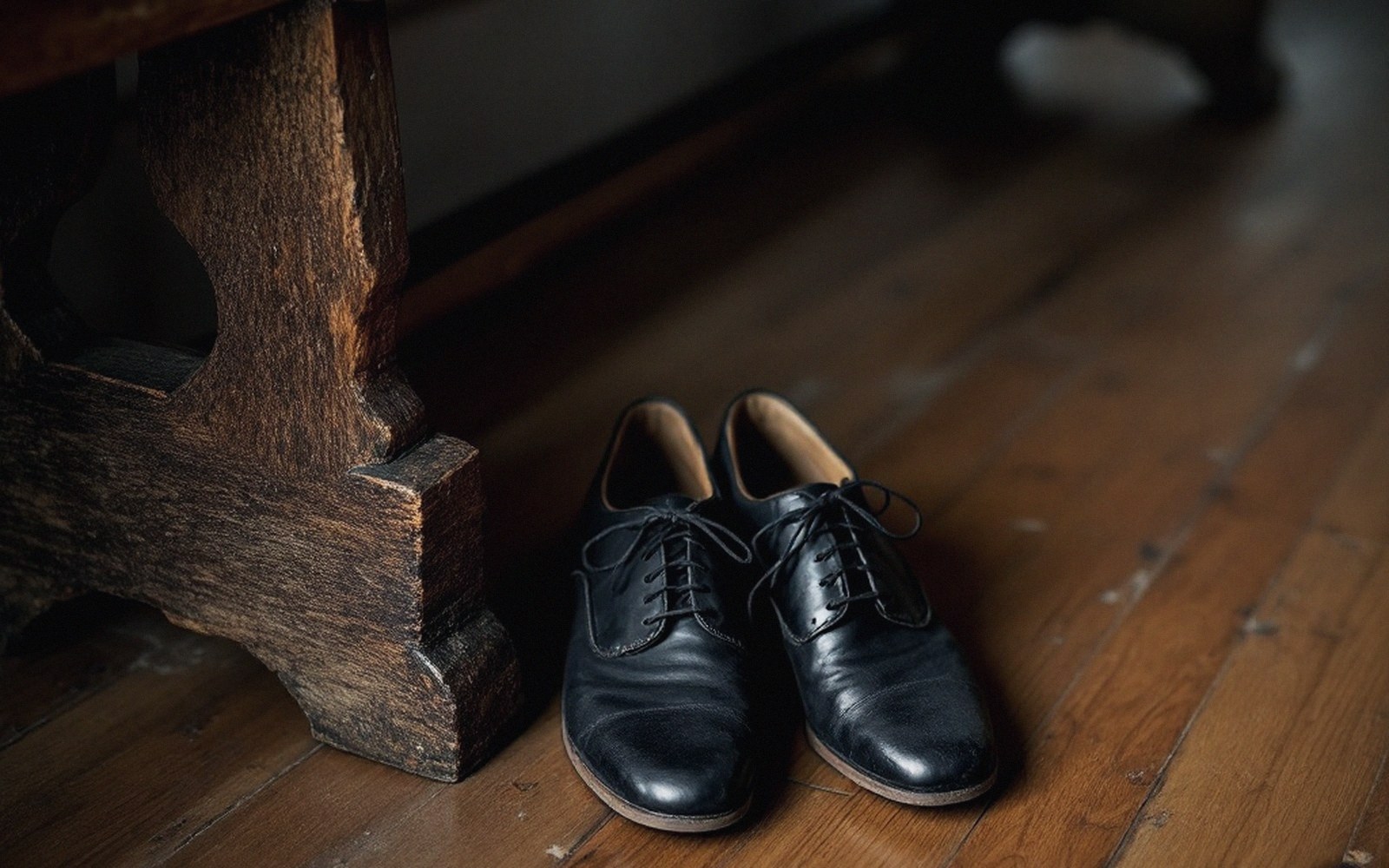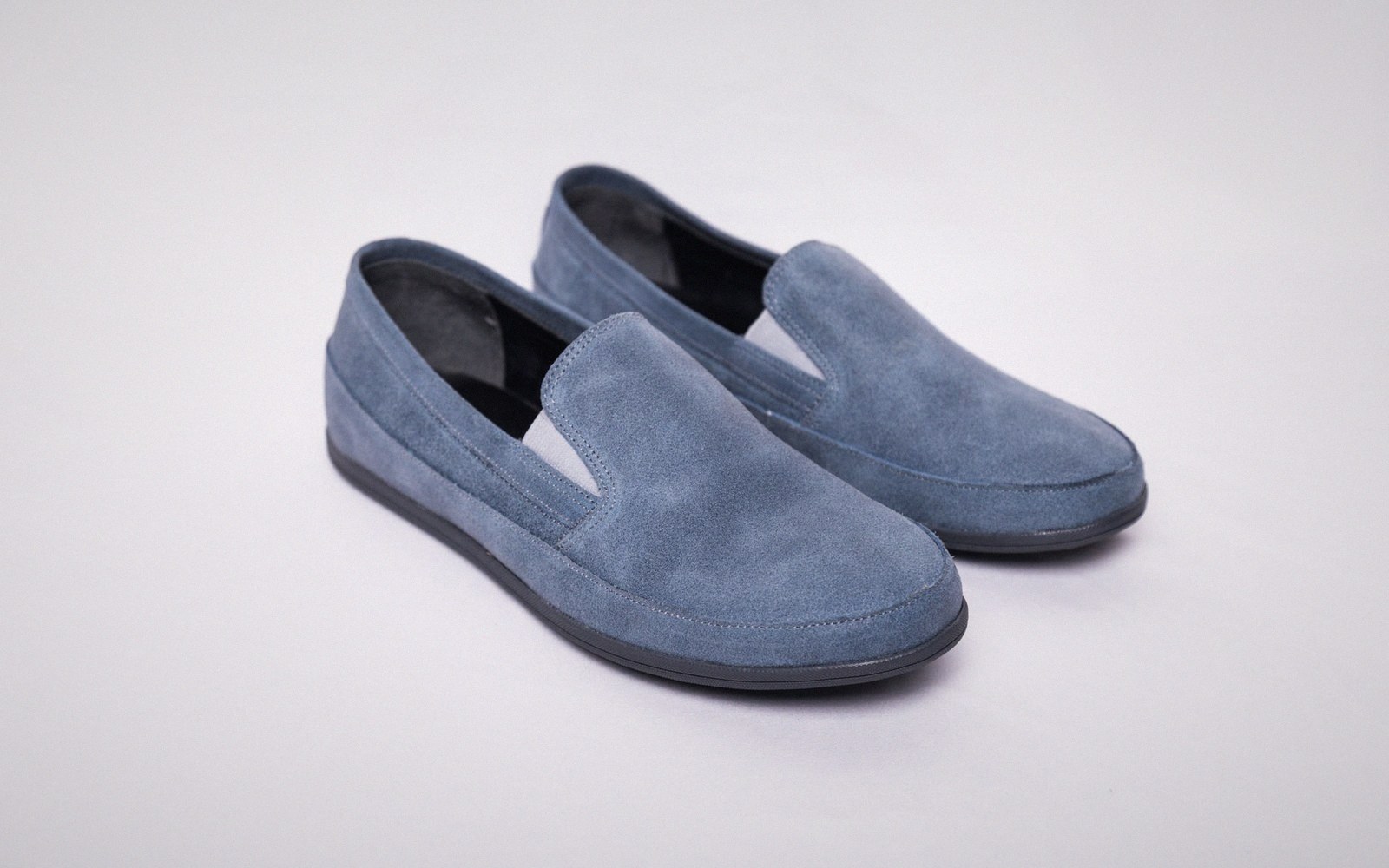
The sole is the interface. Everything else is style.
A dance shoe is not a fashion statement or a safety device. It is a friction management tool. The floor is sprung wood; your body pivots, slides, steps and recovers across it dozens of times per minute. What sits between you and that wood determines whether each of those movements costs you effort or gives it back.
Suede soles are the standard for one specific reason: they slide enough to allow a pivot but grip enough to push off cleanly. That balance is harder to engineer than it sounds. A pivot — any turn where one foot stays planted while the body rotates — requires the foot to rotate against the floor with almost no lateral resistance. A rubber sole, the kind on a trainer or a casual shoe, grips so hard that the rotation travels up through the ankle instead. Over an evening, that torque accumulates. Over months, it damages knees.
Leather soles sit between suede and rubber. They slide more than suede when new, less when worn, and they respond differently to temperature and floor wax. Some dancers prefer them for slower, more grounded styles; they are less forgiving on a fast floor.
Heel height is a balance question, not an aesthetic one. A small heel — eight to ten millimetres for most men's dance shoes, a Cuban heel up to around thirty-five millimetres for many women's styles — shifts the body's centre of gravity forward very slightly, loading the ball of the foot, which is where swing dancing actually wants you. A flat sole is not neutral; on a sprung floor with forward momentum, flat often means back-weighted. Very high heels create the opposite problem: the body tips forward of its own base, making recovery from a spin or a quick directional change slower and less controlled.
The case against trainers is not snobbery. Rubber soles grip unpredictably as you rotate, they mark and scuff wood floors that other dancers rely on, and the cushioning built into athletic footwear absorbs the floor's feedback — which is information you need. You feel the floor through a suede sole. A trainer turns it into noise.
Keep suede clean with a wire brush; a glazed sole behaves like leather and loses the point. That is the whole maintenance programme.