The social floor runs on a few operating principles. Ignore them and the whole machine degrades for everyone in the room.
An invitation is a question, not a summons. You extend a hand, make eye contact, maybe say "would you like to dance?" — and you wait. The other person says yes, or they say no, or they nod toward their water and you understand. What you do not do is stand there requiring an explanation for the no. A declined ask costs you nothing; pressing it costs the room something, because people who get pressured stop dancing socially.
Declining is also a skill. "No thank you" is complete. You are not obliged to dance with everyone who asks, and a floor that made declining socially punishing would be one where people danced badly under duress. The one soft convention worth knowing: if you decline an ask and then accept the next one from someone else in the same song, you have created a small awkwardness. It is not a law, but it reads as a snub, and snubs circulate.
The standard unit is a song. You are committing to roughly three minutes, not the evening. When the tune ends, the dance ends unless you both visibly want to continue. A brief "thank you" — and you mean it, because the other person just gave you three minutes of their body and attention — then you each go your separate ways. Two or three songs in a row is a thing that happens; it is also a thing both people have to be choosing, not one person herding the other through.
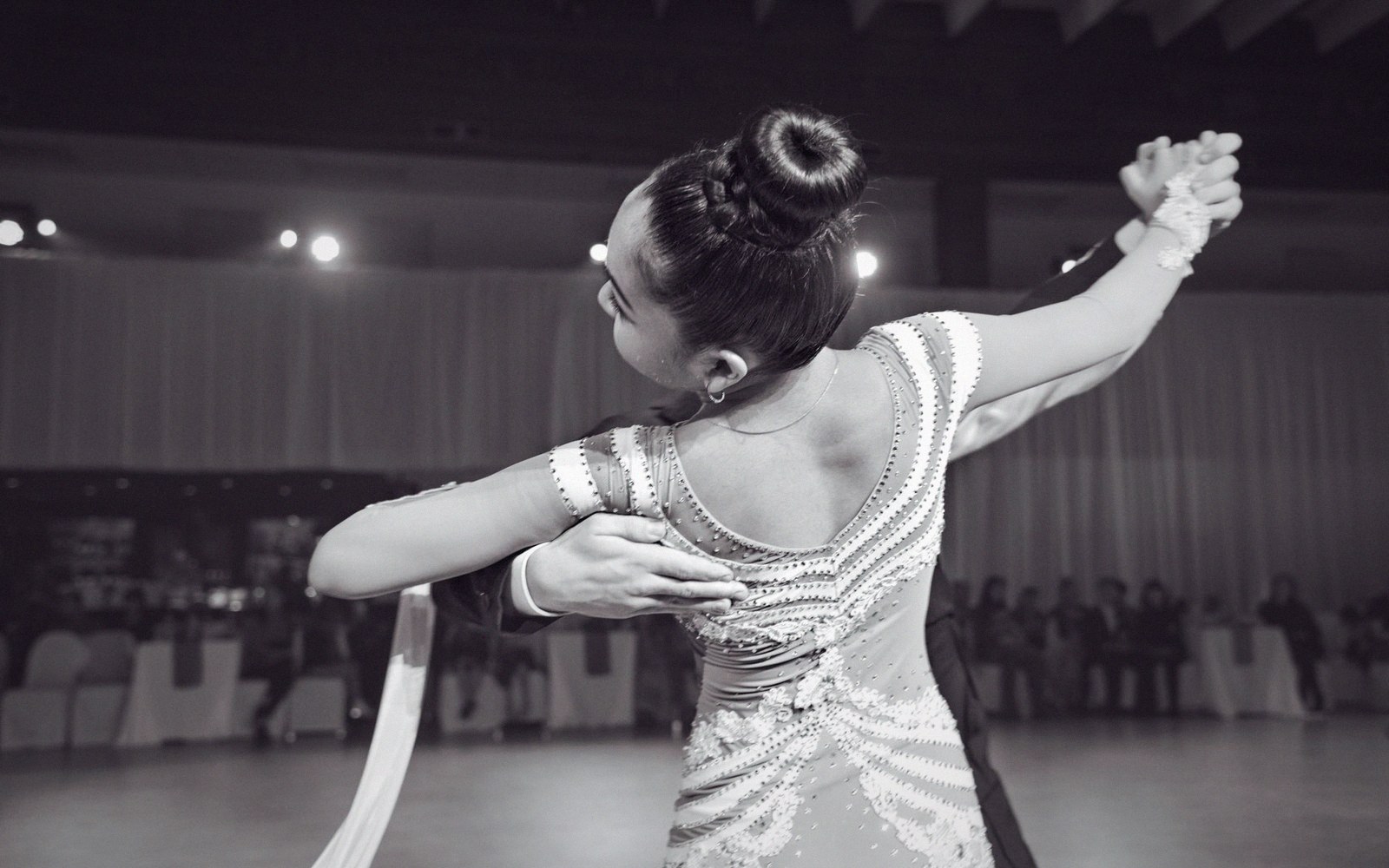
A social floor is not a stage. The people around you are not your audience; they are co-inhabitants of shared space, and floorcraft — the management of your footprint, your sightlines, your slot — matters more than whether your performance looked good. The distinction sounds obvious until you watch someone blow through a crowded floor doing aerials because the choreography called for it. That is a choice that puts other people's bodies at risk, and it tends to get someone asked to leave.
Hygiene is a mechanical issue, not a politeness one. The dance is close. You are sweating. The floor runs for hours. Breath, body odor and soaked clothing are not personal failings — they are physical facts the floor manages collectively by the simple means of everyone staying on top of them. A spare shirt in a bag is standard practice at long dances. Breath mints cost almost nothing. Neither of these is squeamishness; they are maintenance.
Here is the full mechanics of it: you ask, you accept a no gracefully, you dance for the duration of the song, you thank your partner, and you repeat. You manage your footprint on the floor. You stay clean and dry enough that the close-contact part of the evening is not punishing for the person in your arms.
What the floor does not require: that you be good. Beginners belong on a social floor from the moment they have enough control not to injure someone, which in most cases is after a few weeks of class. The floor expects that you will improve through doing it — that is, in fact, the primary mechanism by which it self-sustains. What it cannot accommodate is someone who treats the social contract as optional because they are either very good or very shy. Competence is not a license to ignore other people's experience. Shyness is not a reason to refuse the whole thing permanently.
The floor works when everyone on it treats dancing with a stranger as a small, repeatable act of good faith. That is the whole expectation.