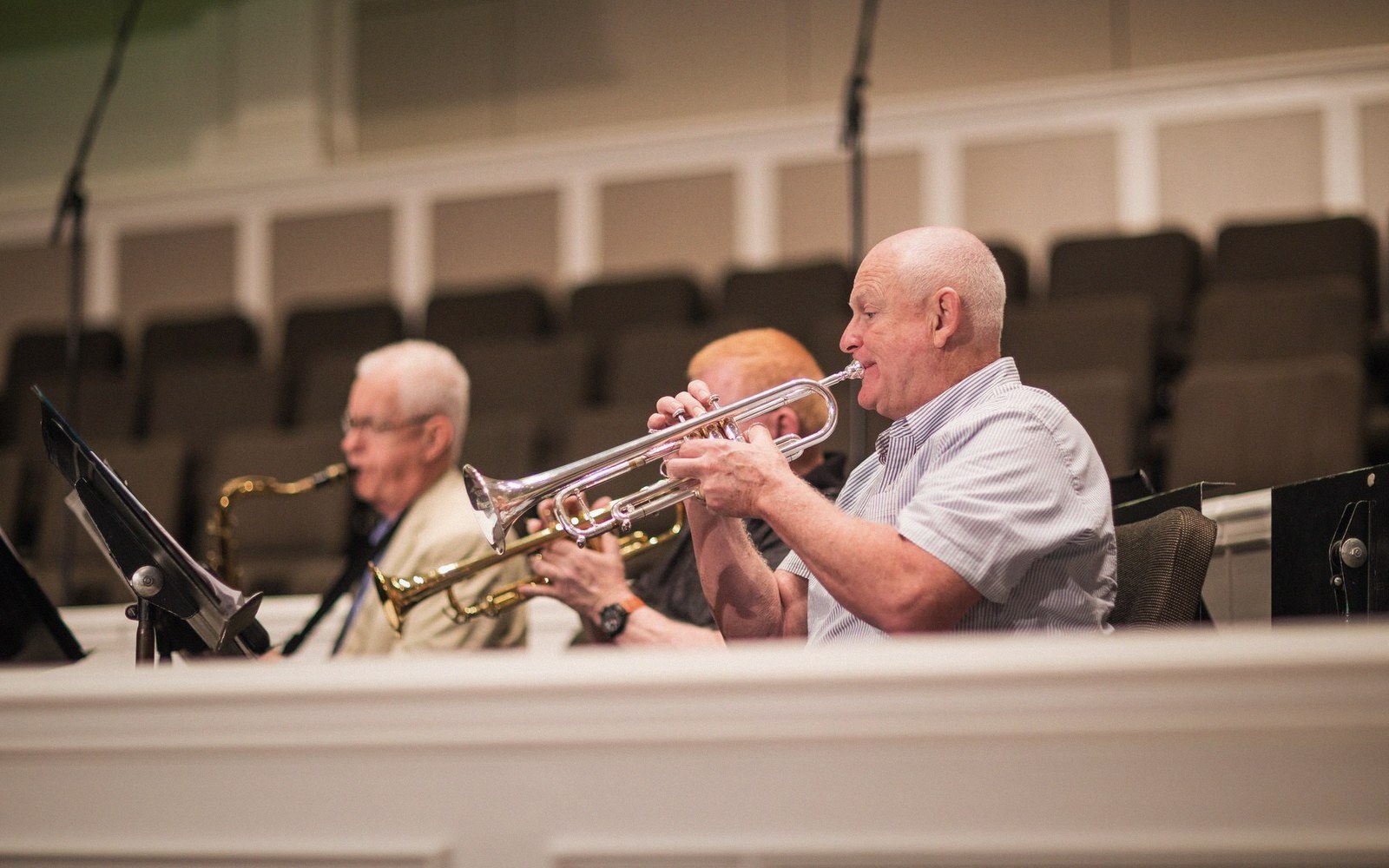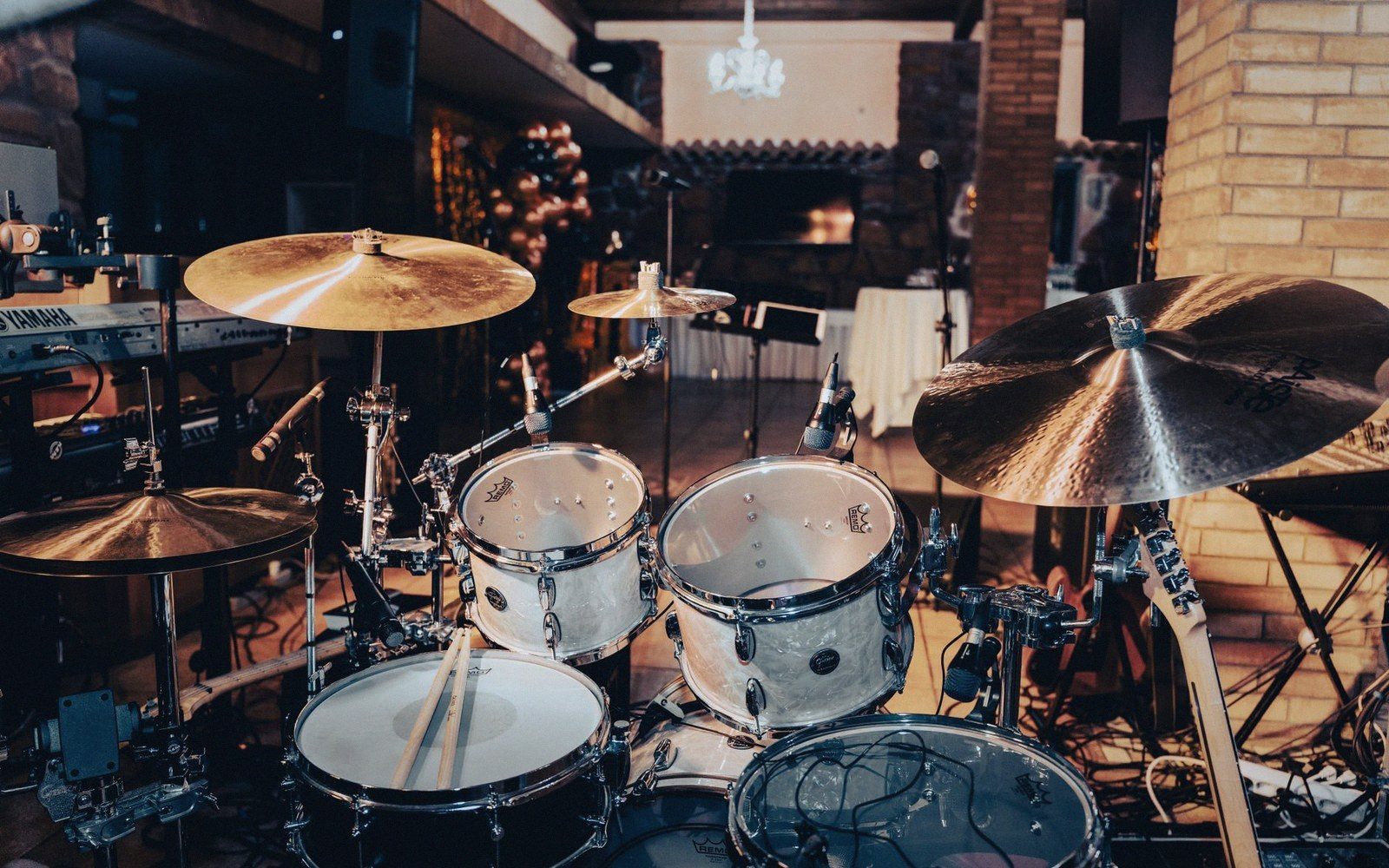
The floor doesn't care about your solo. It needs a pulse.
Strip a swing band down to its working parts and you find four instruments doing one job: keeping a room moving. Bass, drums, guitar, piano — the rhythm section — exist at a social dance not to be heard as a front line but to be felt as a foundation. When they do their job right, dancers don't notice them. When they don't, the floor empties one couple at a time, and nobody can explain why they suddenly want to sit down.
The walking bass is the clearest example of this principle in action. A bassist playing for dancers walks quarter notes — one note per beat, four beats per bar, no gaps, no decoration that costs you a beat. The note choices matter: a good walking line implies the harmony, keeps the momentum moving forward, and lands with just enough weight that a dancer's body registers it without the brain getting involved. The bass is a metronome with opinions, and both halves of that description are essential. Too mechanical and the pulse goes dead; too opinionated and dancers lose the beat they're relying on. The great Swing Era bassists — Walter Page with Count Basie's orchestra being the canonical example — understood that shape and steadiness are not opposites. Page's lines breathe while remaining absolutely reliable, which is why Basie's rhythm section became the textbook.
Drums build on that foundation rather than replacing it. For a dance floor, the central tool is the ride cymbal: a steady pattern, typically the jazz ride pattern that puts a pulse on beats two and four via the hi-hat while the right hand keeps time on the cymbal. The ride pattern tells a dancer where the backbeat is, which is where a body naturally wants to accent — the pop of a pulse that makes a swingout feel inevitable rather than effortful. A drummer who abandons the ride to play busily around the kit is pulling the rug from under dancers who have built their movement on that steady signal. The snare is for accents and conversation with the band, not for filling every available space. Jo Jones, the Basie drummer who helped define what a dance-band drummer sounds like, famously used the hi-hat as his primary timekeeping tool when the ride was not yet standard; the principle was identical — a reliable, audible pulse that the floor could trust.
Guitar and piano complete the machine by filling in the harmony on the offbeats. In Count Basie's Kansas City style, Freddie Green's guitar played four-to-the-bar rhythm guitar — no amplifier, just acoustic volume, every chord landing right on the beat but felt most strongly between the beats as a forward-pulling texture. Basie himself comped sparsely on piano: a chord here, a riff there, silence where silence served. That restraint is not minimalism as an aesthetic; it is professionalism in service of function. A pianist who voices every chord with full, ringing voicings, or who fills every gap with a run, is cluttering the frequency range where the melody and horns need to live and adding rhythmic information that competes with what the bass and drums are already telling the floor.
Every member of a rhythm section can play. That is not in question. The problem is that dancing requires an unbroken, steady pulse, and extended soloing — particularly when it involves unusual rhythmic displacement or abandoning the time-keeping role — interrupts exactly what dancers need. A room of two hundred people does not consciously think the bass just dropped out of walking time, but their movement becomes uncertain; the couple that was locked in starts hedging, the footwork loses its snap, and the energy that took twenty minutes to build can bleed out in thirty seconds.
This is not an argument against solos. Big-band arrangements have always included them, and a well-constructed solo over a rhythm section that maintains its function is one of the great pleasures of live swing. The issue is proportion and role clarity. When a rhythm section instrument solos, the remaining three members must hold the floor harder, not relax into accompaniment of the soloist. And the solo itself works best when it stays rhythmically legible — when a listener who is also using their feet can still find the beat inside the improvisation. This is why the best dance-floor soloists tend to be players who swing hard even inside complexity, rather than players who use complexity to escape the obligation of swing.
What a band does differently for dancers goes further into arrangement length and tempo discipline at the bandstand level. But those decisions mean nothing without the machine underneath running correctly. A bandleader can pick the right tempo, stretch the song to give the floor time to settle, and write the most dancer-friendly arrangement in the repertoire — and a rhythm section that doesn't hold its job will undo all of it. The floor is standing on the bass, drums, guitar and piano. What the floor needs is for those instruments to remember that, and to stay.