
The physical space doesn't just host a dance style — it selects one.
Walk into a ballroom with twenty-foot ceilings, a sprung oak floor running sixty feet in any direction, and a big band elevated on a bandstand at the far end. The room is already telling you what to dance. That architecture was built for Lindy Hop — for swingouts that travel, for aerials that leave the ground, for a couple moving through space rather than holding a fixed point in it. The Savoy Ballroom in Harlem ran to roughly two hundred feet in length. People didn't just dance in that room; they circulated through it, reading traffic and navigating the floor the way drivers read a highway. The space demanded travelling dances.
Shrink the room by two-thirds, drop the ceiling to nine feet, pack in twice the bodies per square foot, and the swingout stops being practical. This is exactly the situation that shaped Balboa on the Balboa Peninsula in Southern California in the 1930s — floors so dense that extended partnering was impossible, and the dance folded inward to a chest-to-chest hold, minimal footwork displacement, everything happening below the knee. The room didn't ban Lindy Hop. It made Lindy Hop impractical and let something tighter survive.
Ceiling height matters in ways people don't always name aloud. A low ceiling penalises anything vertical — the big Charleston kick, the overhead lift, even an exuberant pulse that wants to go upward before it comes down. Collegiate Shag, which runs on a relentless hop-driven bounce, reads differently at nine feet than at twenty. At low ceilings the energy has to go sideways or stay contained; the dance silently adjusts.
Where the band sits shapes the floor more than most dancers notice. A bandstand at one end of a rectangular room creates a sound gradient: loudest near the stand, falling off toward the back wall. At close range, the beat is physically present — you feel the kick drum before you hear it — and the temptation is to lock onto it and play it safe rhythmically. Farther away, where the sound has smeared, dancers rely more on their own internalized pulse and on each other through the connection. The same tune produces different dances at different distances from the source.
A band playing at the same level as the floor — no elevation — diffuses the sound differently again. Elevation helps projection in a large room; without it, the mix becomes more ambient and the rhythm section competes with the room's own reflections. When the music is hard to read, the floor negotiates its own tempo, and couples start to diverge from each other in ways that make floorcraft harder, not easier.
Live music also controls absolute volume in ways a DJ cannot replicate with the same granularity. A good bandleader adjusts between sets and even between tunes based on how the room is responding — which is one reason what a band does differently for dancers is a real craft question and not just a matter of repertoire.
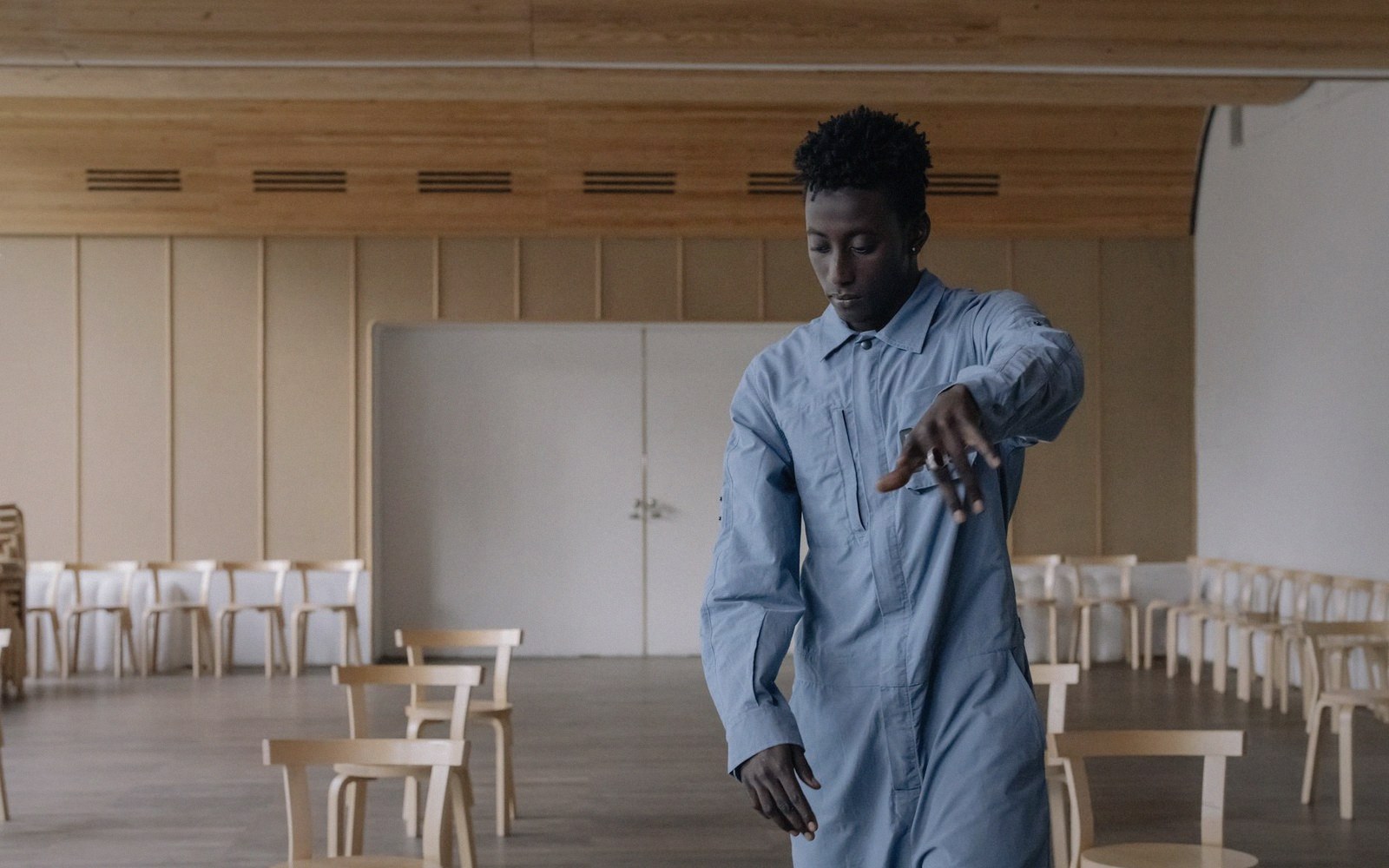
None of this is deterministic. Dancers adapt, and a skilled floor will make a low-ceilinged room work for more than it was designed to hold. But the adaptations accumulate into something: a tendency, a local style, a preference that gets baked into how people in that scene understand their own dance. Regional styles in swing have almost always had a physical explanation. The floor area, the ceiling, the amplification, the crowd density — these parameters interact and over time produce characteristic choices. The room doesn't force anything. It just makes certain things easier, and ease wins in the long run.