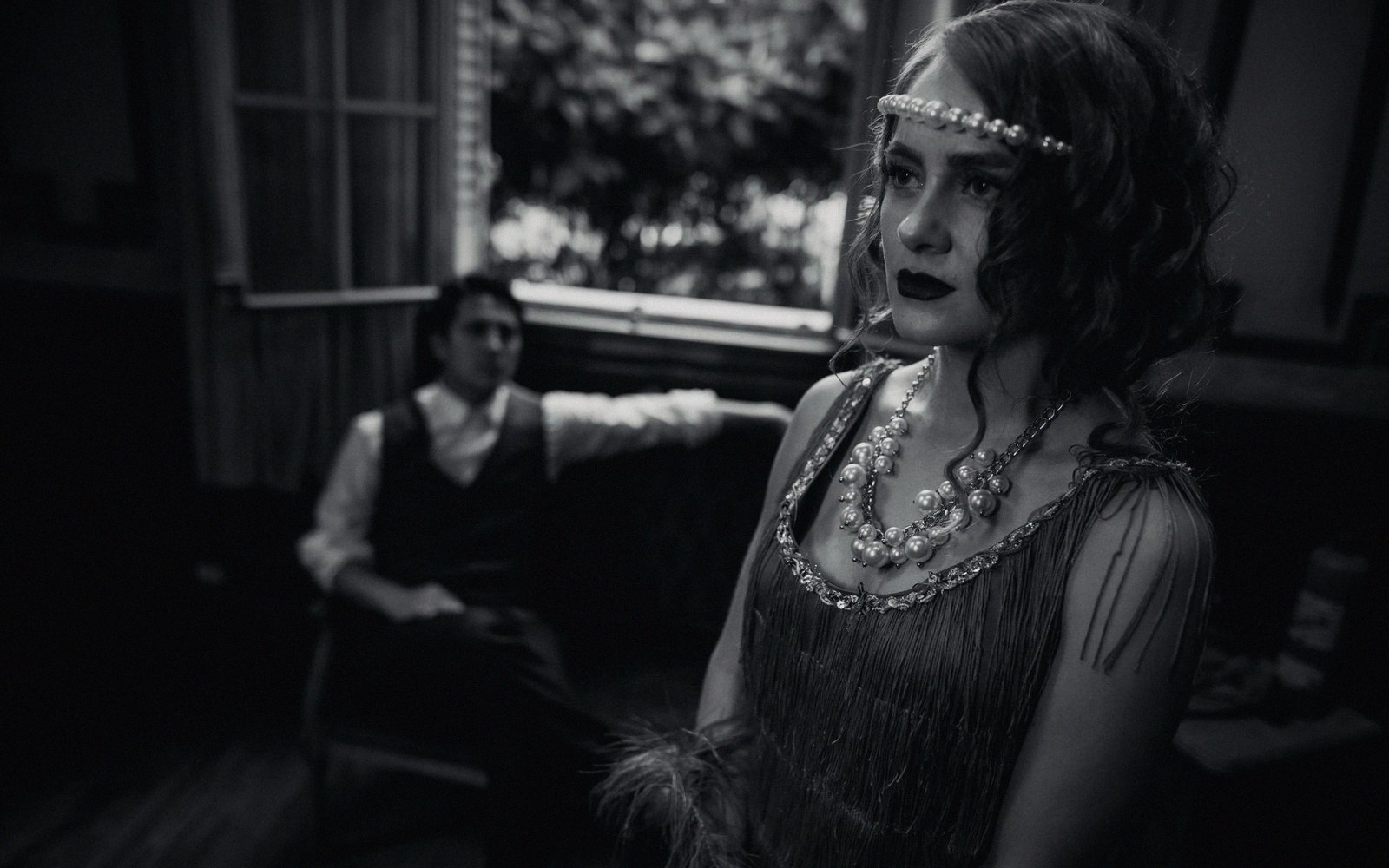
Older than the Savoy and simpler than a swingout, Charleston never left — it got absorbed.
Charleston arrived in mainstream American consciousness in 1923, carried there by a Black musical theatre production called Runnin' Wild and the James P. Johnson tune of the same name as the dance. But the step itself was already circulating in Black communities along the eastern seaboard, particularly in South Carolina, well before Broadway touched it. The 1920s version — knees crossing, heels kicking out, arms swinging with deliberate looseness — became the defining image of the decade, and then got dismissed as a fad the moment the decade ended.
It wasn't a fad. It was infrastructure.
By the early 1930s, when the dancers at the Savoy Ballroom in Harlem were building what would become Lindy Hop, Charleston wasn't replaced — it was folded in. The eight-count basic of Charleston maps almost directly onto the eight-count structure of the Lindy swingout. Speeding up a swingout until the footwork compresses, or dropping the partnership briefly to trade solo phrases, both reach for the same movement vocabulary. The gear shift is almost invisible from the outside.
There are three practical versions a social dancer encounters.
Solo Charleston is the oldest and most direct. It lives on one spot or travels forward and back on a diagonal: kick forward, step back, kick back, step forward. The rhythm is jazz rhythm in footwork form — syncopations, held beats, a constant negotiation between the body's momentum and the pulse. It's also what dancers fall back on when the floor is so crowded that partnered figures become unworkable. Solo work isn't a consolation prize; the Savoy-era dancers used it to improvise, to respond to a band break, to simply play.
20s Charleston (sometimes called the two-hand Charleston or tandem Charleston) positions partners side by side or in a face-to-face hold with both hands connected. Partners mirror or shadow each other's kicks, trading weight across a shared frame. The connection is light — it has to be, because the legs need room — and the lead is more about matching timing than directing movement. This is the version people reach for when a song sits at 180–200 beats per minute and a swingout would feel frantic rather than musical.
Lindy Charleston integrates the kicks and footwork directly into the eight-count Lindy structure: a swingout opens into side-by-side position, kicks happen, and then the connection resumes. It's not a separate dance performed in sequence; it's a texture within a single conversation. A good social dancer moves between swingout and Charleston within a single phrase without either partner announcing the switch.
Charleston is a gear, not an accent. When the tempo climbs or the floor tightens, it's often the most efficient shape available — the footwork is bouncy rather than traveling, the partnership can loosen without breaking, and it gives both dancers room to interpret the band rather than just execute figures. It's also forgiving at high speed in a way that more complex partnered patterns are not: the mechanics are simple enough that the body can express rather than merely survive.
The solo roots matter here too. A dancer who has spent time with solo Charleston — actually working the timing against a record, not just walking through the shape — carries a different quality of pulse into their partnered dancing. The bounce isn't decoration. It's the thing the whole frame sits on.
Charleston didn't disappear into Lindy Hop. It became the vocabulary Lindy borrows from every time the music pushes.